 |
| The uncommon Plateau Milkvine is often mistaken for the more common Pearl Milkvine (above). |
Every species of native plant has its purpose, and while many are valued by humans for their fragrant flowers and foliage, those that are valued for their role in keeping the earth’s nutrient cycles intact should be regarded as having the highest value. Those nutrient cycles need to be protected through plant preservation or restoration, as they are what provides nourishment for the lifecycles of our native wildlife and protects the health of our ecosystems.
Even among those folks who are familiar with many native plants that perform this role, there are some little-known species that are often overlooked and under appreciated. In Central Texas, there are a few species of vines in the Milkweed family that many fail to notice, including Star Milkvine (Matelea biflora), Plateau Milkvine (Matelea edwardsensis), and Bearded Swallow-wort (Cynanchum barbigerum).
Star Milkvine, also called Purple Milkweed Vine, is a relatively common vine that grows in pastures, prairies, and other open ground, usually in chalky soil throughout Central and North Texas. This small, trailing vine to 2 feet has five-petaled, star-shaped, deep purplish-brown flowers that are 0.5 inches wide. Blooming from March to June, the flowers occur in pairs along the trailing stems that radiate from a central rootstock, and arise from the axils of the opposite, triangular leaves. The flowers, leaves, and stems are all quite hairy, as is true of many members of the Milkweed family. Its habit is to grow low among grasses, often in areas that are mowed, so it is frequently passed over by humans, but is a useful host plant for Queen and Soldier butterflies and a nectar plant for several species of bees.

Star Milkvine has low-growing stems that radiate out
from a central rootstock.
 |
| The unusual flowers of Star Milkvine occur in pairs. |
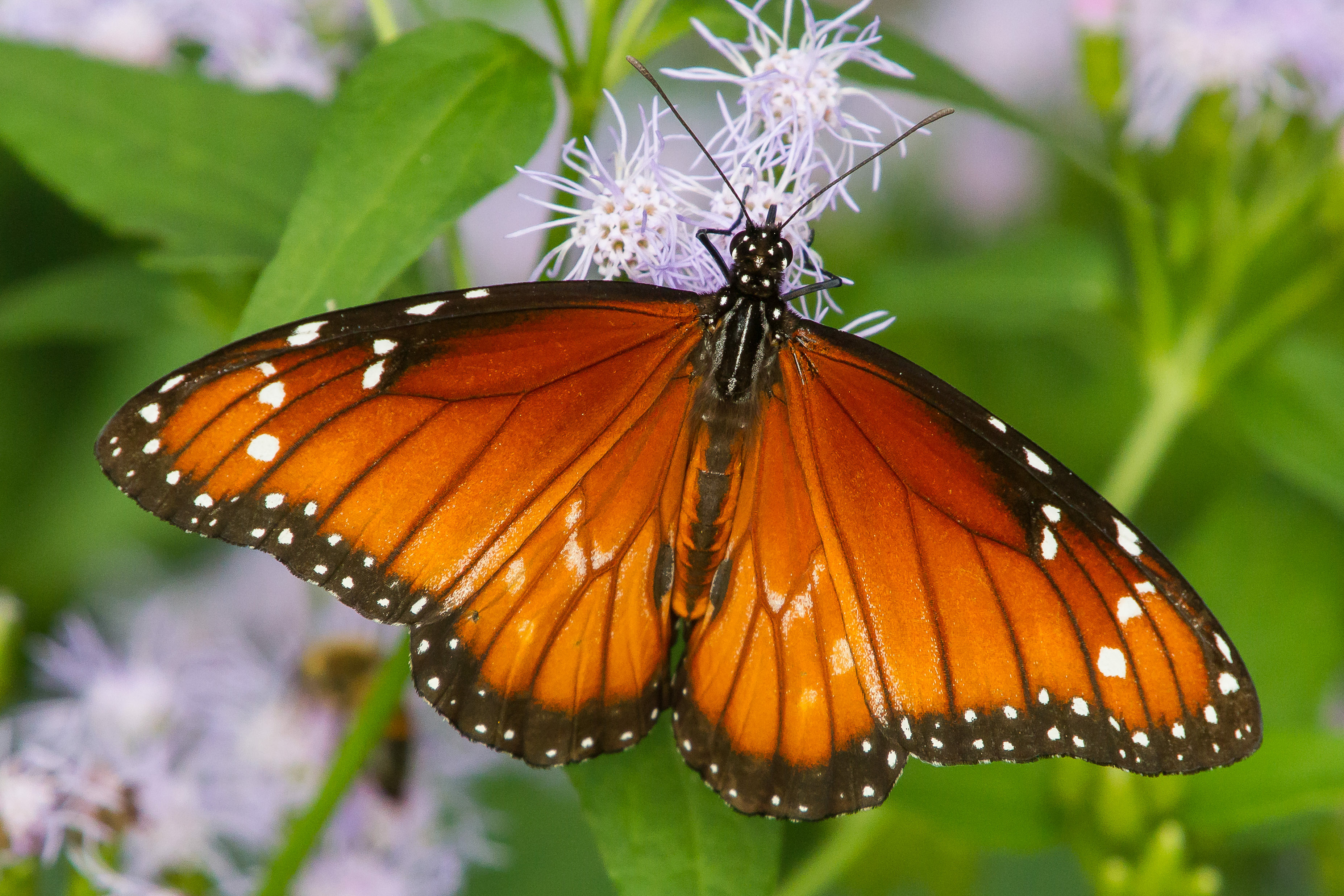 |
| Soldier |
Sometimes mistaken for the more common Pearl Milkvine, Plateau Milkvine is a vine to 3 feet that is endemic only to the Edwards Plateau of Central Texas. This uncommon vine shares the same twining habit of Pearl Milkvine, but its leaves, while similar, generally have a somewhat wavy edge, and its flowers are bell-shaped instead of flat. Additionally, its 0.7 inch wide greenish-white flowers do not have a pearl center, and its petals are not solely reticulate-patterned, having parallel veins in their lower halves and centers, and reticulate or networked veins only on the edges or margins. Blooming in April and May, this vine can be found on gravelly soils in open woodlands, often climbing on other plants, and is a native host plant for Queen butterflies. Due to indiscriminate land clearing, this plant is listed as ‘vulnerable’ in terms of its conservation status in Texas.

Plateau Milkvine is a rare cousin to Pearl Milkvine.

The flowers of Plateau Milkvine distinguish it
from Pearl Milkvine.
 |
| Queen |
Growing up to 8 feet long, Bearded Swallow-wort, also called Thicket Threadvine and Aphid Vine, is a delicate vine that climbs on shrubs and small trees in open woodlands, in thickets, and along roadsides and fencerows in the Edwards Plateau and South Texas. It has small glossy lance-shaped, opposite leaves to 2 inches long, and from March to August, tiny creamy-white flowers appear in loose clusters from the leaf axils. These flowers are 0.25 inches wide, bell-shaped, and have five distinctively hairy or ‘bearded’ recurved petals. Five similar species in this genus are present in Texas, but this is the only one with ‘bearded’ flower petals. Aphids are often found on this plant, giving rise to one of its other common names, and it is the host plant for the Obscure Sphinx Moth (Erinnyis obscura).

Bearded Swallow-wort is a rather delicate climbing vine.

The fringed or 'bearded' flowers
of Bearded Swallow-wort.
 |
| Obscure Sphinx |
Whether it is due to their scarcity or diminutive stature, it is easy to miss these vines. While they might be undervalued by humans, they are quite valuable to our native wildlife!


