Search Nature Watch

Thursday, October 5, 2017

Fields of Gold


Cooler temperatures and shorter days mark the onset of autumn, and the golden colors of the season begin to surround us.  Among the amber and scarlet hues making an appearance in the landscape, one cannot help but notice three of our most common fall-blooming native plants: Goldeneye (Viguiera dentata), Zexmenia (Wedelia acapulcensis var. hispida),  and Prairie Goldenrod (Solidago nemoralis).  

A member of the sunflower family, Goldeneye is a bushy, drought-tolerant, multi-branched plant that tends to grow in colonies, providing rich swaths of golden color along our roadsides and in open areas.  It has narrow leaves and numerous 1.5 inch daisy-like flowers at the tips of long, slender stalks.  Growing to 3 feet tall in full sun or up to 6 feet tall in partial shade, this plant is native not only to Texas but to Arizona and New Mexico as well.  It prefers relatively dry, partially shaded areas such as woodland edges and open prairies, and in Mexico is also known by the common name Chimalacate.  


Goldeneye

The mid to late fall blooms of Goldeneye not only provide seasonal color, but provide for native wildlife as well.  Goldeneye is a larval food plant for both the Bordered Patch and Cassius Blue butterflies, and if spent flower stalks are left to stand through most of the winter, they will provide good seed forage for Lesser Goldfinches and other birds.  Infusions of this plant are still used today as an antibacterial treatment for baby rash.  


Often called Creeping-oxeye or Hairy Wedelia, Zexmenia is a small shrub 8 inches to 2.5 feet tall, that blooms continuously from May to November, although often most profusely once the weather has cooled.  The woody stems and rough-hairy green foliage give rise to showy, 1 inch wide butterscotch-orange flowers on long stems that extend vertically above the pointy-lobed leaves. Hardy, long-lived, long-blooming, and non-aggressive, this drought-tolerant plant appreciates full sun and dry, well-drained soils.  It is another host plant for the Bordered Patch butterfly, a nectar source for many species of butterflies, and its seeds are a favorite food of bobwhite quail.

Zexmenia

Prairie Goldenrod, also called Gray Goldenrod or Field Goldenrod, is a slender-stemmed plant 1.5 to 2 feet tall, that blooms from June through October.  A member of the aster family, it has thin, coarsely-toothed leaves and yellow flowers that are borne on the upper side of hairy stalks, arching out and downward to create a vase-shaped flower cluster.  Individual plants bloom at various times, extending the flowering season, but they are most noticeable in fall, especially when paired with purple Gayfeather and red Autumn Sage.  An excellent addition to a wildflower meadow or a sunny garden, Prairie Goldenrod is naturally found in dry, open woods and upland prairies, and does well in full sun to part shade. A carefree plant, it can become invasive if left alone, but is also easily controlled.  


Prairie Goldenrod

Of special value to bees and butterflies for its pollen and nectar, and to several species of finches for its seeds, Prairie Goldenrod was also used by Native Americans to treat jaundice and kidney disorders, and as a wash for burns and skin ulcers.  The Navajo burned the leaves as incense, and used the seeds for food.


As you wander along roadways and pathways this fall, admire these fields of gold that delight not only our senses, but provide a bountiful harvest for our wild neighbors as well!


Saturday, September 16, 2017

It's a Sphinx, Methinks!


A White-lined Sphinx hovers while feeding at a thistle
A family of moths called the Sphingidae are more commonly known as hawk moths, hummingbird moths, and sphinx moths.  This family has over 1,450 species worldwide, and 73 of them are known to be present in Texas.  Generally speaking, these moths are named not just for their streamlined bullet-shaped bodies that have long narrow forewings and short hindwings, but also for their distinct behavior which comes in the form of swift, hovering flight.  Many species in this family hover in mid-air or swing from side to side when feeding on flowers, an ability that has evolved in only three other groups: hummingbirds, certain bats, and hoverflies.  In addition to nectaring on flowers, these moths often pollinate them at the same time.  

The leaf-feeding caterpillars or larva of these moths typically have a smooth body with a characteristic horn near their posterior end, hence the common name hornworm.  They pupate in an earthen cell or loose cocoon at or near the soil surface.  The word sphinx was first associated with the larva in 1736, when Rene Reaumur, a French scientist and entomologist, noted that they often assumed a pose reminiscent of the mysterious Egyptian Sphinx of antiquity.  They accomplish this pose by holding their anterior legs off their substrate and tucking their heads underneath when resting, which appears to form an upright praying position.  

Vine Sphinx

White-lined Sphinx
In our area, some of the more interesting sphinx moths include the Vine Sphinx (Eumorpha vitis), Tersa Sphinx (Xylophanes tersa), Waved Sphinx (Ceratomia undulosa), and Rustic Sphinx (Manduca rustica).  The Vine Sphinx appears similar to the well-known White-lined Sphinx, but is dark greenish-brown with a more complex pattern of sharp whitish streaks and bands on its forewings (instead of an even, pale tan stripe from base to tip intersecting uniform white lines) and a small pinkish patch on its hindwings (instead of a broad pink band).  The wingspan of this moth is 3.5 to 4 inches, it flies from April to May and July to October, and the larva feed on grapevines.  

Tersa Sphinx
The Tersa Sphinx is easily identified by its long pointed abdomen, brownish-tan forewings that look like woodgrain, and hindwings with jagged black and white markings.  This sleek, fighter jet-like moth has a wingspan of 2.5 to 3 inches, flies June to October, and its larva feed on catalpa and smooth false buttonweed.

Waved Sphinx
The Waved Sphinx has brownish-gray forewings with contrasting black streaks and zigzag lines and a small, kidney-shaped white spot outlined in black, while the hindwings are gray with darker gray shading.  Its wingspan is 3 to 4.5 inches, it flies from May to October, and its larva feed on ashes and oaks.  

Rustic Sphinx

The Rustic Sphinx has an abdomen with three pairs of yellow spots along the sides, and yellowish to chocolate-brown forewings with black zigzag lines. It has a wingspan of 3.5 to 6 inches, flies from July to October, and its larva feed on crossvine and trumpet vine. 

Certain species of sphinx moths have been widely used in scientific research aimed at better understanding animal flight and insect physiology.  Some have played a key role in advancing knowledge of hormones produced by nerve cells, while others have contributed to the development of small flying robots by shedding light on how these insects stay airborne while hovering.  Those are some pretty important roles for a sphinx, methinks!   


Wednesday, August 30, 2017

A Thistle Epistle

Mexican Yellow nectaring on Texas Thistle

As one of the most wrongly maligned and misunderstood group of wildflowers, native thistles have never been truly embraced, not even by wildscape gardeners or habitat restoration practitioners. While these plants play a significant role in our ecosystems, they have been a direct casualty of habitat loss, first by plow-based agriculture and followed by the continual development of roads and cities.  Further, recent invasions of non-native, exotic thistle species and the inability to discern them from the superficially similar native species, have contributed to their unjustified reputation and ongoing demise.

Texas Thistle, Cirsium texanum

Native thistles are a beautiful and important group of plants, with subtle blue-green foliage, fascinating stem and leaf architecture, and long-lasting pastel blooms that nourish many species of insects and birds.  The nectar they produce is utilized by many species of bees, wasps, butterflies, moths, flies, beetles, spiders, katydids, and hummingbirds, which demonstrates the wide diversity of animals supported by native thistle flowers.  In late summer and early fall, they are an essential nectar source for migrating Monarch butterflies. Their persistent seed heads provide the favorite food of goldfinches (both Lesser and American) and other songbirds such as the Carolina Chickadee, and the silky fluff attached to mature seeds is used to line their nests in the spring. 

Silvery bracts of the Texas Thistle

While there are many plants with spines that are erroneously called ‘thistles’, true thistles belong to the genus Cirsium. Of the 62 native species in North America, the most important species in our area are the Texas Thistle (Cirsium texanum) and the Yellow Thistle (Cirsium horridulum).  The Texas Thistle, also called Southern Thistle or Gray Woolly Twintip, is an upright, unbranched or sparingly branched plant, 2 to 6.5 feet tall, with grayish-green foliage that is spiny and woolly-white below.  Violet-pink to deep lavender-rose composite flower heads top the stems from April to August, and are surrounded by bracts that bear a silvery strip down the middle.  Texas Thistle is also the larval host plant for the Painted Lady and Mylitta Crescent butterflies.  

Yellow Thistle, Cirsium horridulum
Yellow Thistle, as perhaps foreshadowed by its scientific name, has a host of other, undeserved common names such as Horrid Thistle and Terrible Thistle.  It has a branching, densely hairy stem rising from a 2 foot wide basal rosette, 1 to 5.5 feet tall, with long grayish-green spiny leaves and several large flower heads.  Blooming May to August, these composite flower heads are up to 3 inches wide, surrounded by a whorl of spiny, hairy, leaf like bracts, and are frequently red-purple, pink, or white instead of the namesake yellow.  In the first year of growth this plant remains a low-lying rosette, and ‘bolts’ in the spring of the following year to reach its full height.  Yellow Thistle is an excellent attractant for Sphinx moths and is the larval host plant for the Little Metalmark and Painted Lady butterflies.  

Texas Thistle seed head

It’s time to bring back our native thistles, so this fall consider planting them in your wildscape. These species have evolved with our native pollinators in our natural habitats over thousands of years.  As a result, they benefit us by helping to sustain a healthy ecoweb, protecting our water quality, sequestering carbon in our soils, and adding a sublime beauty and structure to our landscapes.  And that’s our epistle to the thistle! 

Monday, July 10, 2017

Understanding the Balcones Canyonlands Preserve System


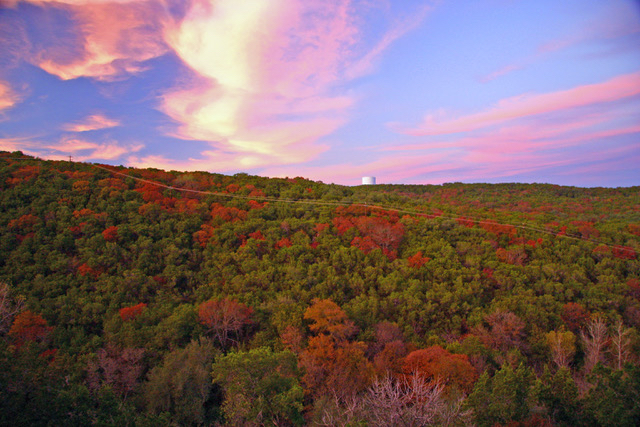
Fall Color in the Balcones Canyonlands Preserve (BCP)

While we are not professionals or employees of the Wildlands Conservation Division, we have volunteered for them for nearly 20 years.  We are Texas Master Naturalists and the authors of two natural history books (with a third in the works).  We also own a private preserve named Woody Hollow that is part of the BCP, and for 10 years have written monthly Nature Watch columns for local neighborhood newsletters.  We have served on the BCP Citizens Advisory Council (CAC) and feel it is important to attempt to set the record straight regarding many of the issues that have been reported regarding the BCP.

In the 1980s, during a conflict that started between land development and enrivonmental conservation, it was discovered that the Golden-cheeked Warbler (GCWA), a bird species that is highly adapted to a very specific and essential habitat in Central Texas, was in peril due to habitat fragmentation and urban sprawl (all GCWAs are native Texans but spend their winters in Central America).  As such, it was listed as a federal endangered species in 1990.  Recognizing that the Austin area was going to continue to grow rapidly (in fact, it has grown over 350% in the last 45 years), the city decided to take action.

In 1992 voters in the City of Austin passed Proposition 10, approving $22 million in bonds for the sole purpose of acquiring and improving lands to be set aside to protect water quality, conserve endagered species, and provide open space for passive public use.  These lands, made up of several tracts in western Travis County, now make up the Balcones Canyonlands Preserve (BCP) System, and are jointly managed and owned by the City of Austin, Travis County, Lower Colorado River Authority, The Nature Conservancy of Texas, Travis Audubon Society, and various private landowers (expressly through permanent conservation easements).  Collectively, activities on these lands are governed by the Balcones Canyonlands Conservation Plan (BCCP) and operated on a permit issued by the U.S. Fish and Wildlife Service (USF&WS).  These activities are carried out by biologists that work for the city or the county, and augmented by corps of specifically trained volunteers.  The preserve system protects 8 endangered species (2 songbirds, 6 karst invertebrates) and 27 species of concern (those becoming increasingly rare).


The endangered Golden-cheeked Warbler (GCWA)

There are several important factors to note regarding the preserve system, which is federally protected.  While this is not intended to be an all inclusive list, it addresses some of the most misunderstood issues and rumors:

The USF&WS permit has several conditions that must be met, and they include total acreage acquired, amount of edge habitat, and number of karst features protected.  Currently, while progress has been made, not all conditions have been satisfied.

While the BCCP and resulting preserve system is the first of its kind in the nation (i.e. made up of several distinct tracts managed by a group of partners), it is not the largest preserve in the U.S.

The USF&WS allows for a concept called ‘take’, a federal term for harm, habitat damage, or other impacts to a species survival.  Developers must pay a fee and donate alternate and suitable acres of habitat commensurate with the acres of habitat they intend to ‘destroy’.  A key point is that the official agreement states that setting aside the 30,000+ acres of preserve was mitigation for allowing 70% of the GCWA’s habitat (non-preserve land) to be developed.  As such, this agreement would be breached if any kind development or other use were allowed in the preserve system.

There has never been an official promise by any authority to ‘open up the preserve to the public’.  In fact, ‘passive public use’ refers to the grandfathering of BCP several tracts included in the overall system that have always allowed public use: Barton Creek Greenbelt, Bull Creek Greenbelt & District Park, Commons Ford Park, Emma Long Metro Park, Mt. Bonnell Park, St. Edwards Park, Stillhouse Hollow Preserve, and Wild Basin.  These ‘public use’ tracts comprise 30% of the overall preserve acreage.  Additionally, unlike these public tracts, there are very few (if any) trails on many of the other preserve tracts closed to the public.  Two of the best ways to see some of these tracts is to sign up for a guided hike or sign up to become a volunteer (http://www.austintexas.gov/page/bcp-access).

Some of the larger preserve tracts that were deeded over to the City of Austin carried with them the legal requirement that they would not ever be open for public use.

Studies are being performed continually on preserve lands to understand what is necessary to optimize conditions for protected species.  For example, data has implicitly shown that the GCWA requires closed canopy and a mix of mature, unfragmented oak-juniper woodland for breeding and nesting success.   Care needs to be taken regarding publicly reported studies regarding the GCWA; many have been proven to overestimate current populations due to incorrect assumptions in the models and/or study constructs.  Additionally, several factors will determine success, including but not limited to the number of acres of protected habitat, long-term viability of the GCWA population, and the genetic diversity of that population.

Fences have been erected to protect preserve boundaries due to vandalism by neighbors and encroachment on preserve property (fence cutting, tree cutting, trail creation, homeless camps, etc).  Two notable examples include the high-profile River Place trail closure, where a section of the trail was constructed on preserve property with no authorization, and a neighbor in Jester Estates who was arrested by the police after being given a cease and desist order for cutting down large sections of trees in the preserve adjacent to his property (twice!).

The city and the county have been very attentive to recent concerns about wildfires, and have implemented shaded fuel breaks on urban-wildland interfaces.  Note that increasing human use of preserves would likely increase the chance of human-caused fires and other management issues.  One such issue is the management of feral hogs.  They are of increasing concern and elimination efforts would be such more complicated if tracts were open to public use.

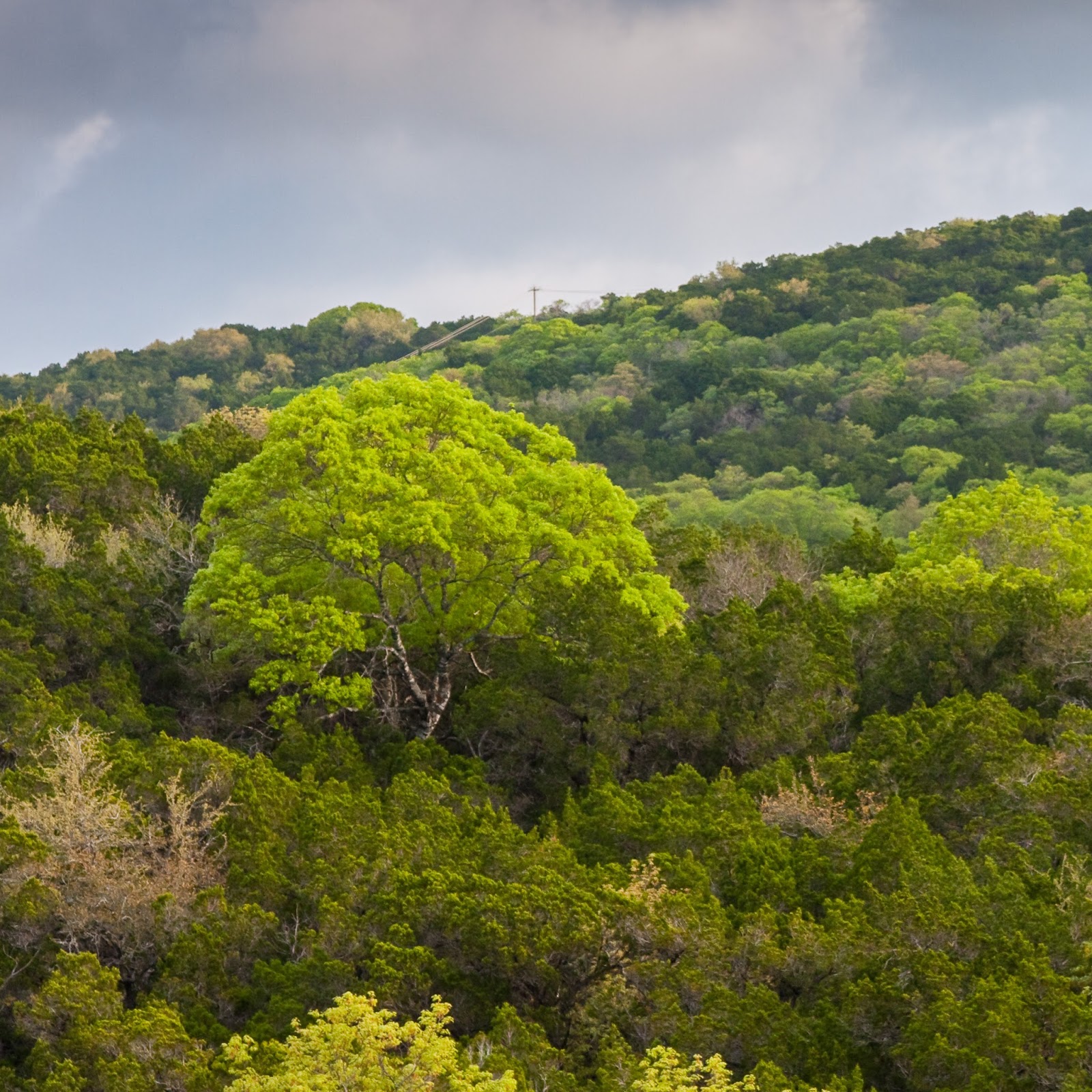
Oak - Juniper Woodland is essential habitat for the GCWA

The benefits of the preserve system are not one-sided.  For humans, it protects our natural heritage by offering sanctuary to a wide array of native plants and animals unable to adapt to urban and suburban development.  Keeping the vegetation healthy helps minimize erosion, moderates urban heat island effects, filters air & water pollutants, and allows rain to slowly infiltrate into the ground to recharge our aquifers.  

One final point.  There is a distinct difference between a ‘park’ and a ‘preserve’.  ‘Parks’ are set aside for people and their recreational activities, while ‘preserves’ are set aside to protect habitat for rare or endangered species as well as the quality of our air and water.  We’re pretty sure most reasonable people would think that’s a fair balance, and one that contributes significantly to the high quality of life here in Central Texas.

P.S. For those who are looking for more trails to use for mountain biking, hiking, and running, consider these excellent alternatives in the area:

Walnut Creek Metropolitan Park (Austin):
http://www.trailroots.com/austin-map-routes/walnut-creek-metropolitan-park-north

Flat Creek Crossing Ranch (Johnson City):
http://flatcreekcrossingranch.com

Rocky Hill Ranch (Smithville):
http://www.rockyhillranch.com

Milton Reimers Ranch Park (Dripping Springs):
https://parks.traviscountytx.gov/find-a-park/reimers-ranch

Reveille Peak Ranch (Burnet):
https://rprtexas.com

Friday, June 16, 2017

Common Centauries


Mountain Pink, Zeltnera beyrichii

As members of the Gentian Family, there are many species of Centaurium worldwide, and three of them are native right here in Central Texas.  The genus was named after the centaur Chiron, famed in Greek mythology for being a great healer through his skill in using medicinal herbs. Herbalists today still use the extract from certain species in this genus, commercially often called ‘stomach bitter’, to aid in the process of digestion.  More recently, molecular studies have reclassified the genus, and the species that belong to the ‘Texas group’ have been renamed Zeltnera.

Mountain Pink (Zeltnera beyrichii), also called Meadow Pink, Catchfly, or Quinineweed, is an annual herb less than a foot tall and best described as a neat bouquet of small, pink flowers. Blooming May through July, Mountain Pink sprouts up like an inverted cone 8 to 12 inches high, on rocky hillsides, limestone outcrops, and along gravelly roadways.  Its leaves are threadlike and are held below the multiple 0.5 to 1.0 inch wide showy pink five-petaled blooms that provide nectar for moths, butterflies, bees, and other insects.  Pioneers used this plant as a medicinal plant to help reduce fevers, which is the origin for one of its common names.

Lady Bird’s Centaury, Z. texensis

Lady Bird’s Centaury (Z. texensis) is named in honor of Lady Bird Johnson, and is a delicate plant 3 to 7 inches tall with an open, branched habit.  Found in dry, grassy areas of the Edwards Plateau and Blackland Prairies, its leaves are linear and shorten in length on the upper part of the plant. Smaller than the other Centaurium species, its light pink five-petaled flowers bloom June to August, and are only about 0.25 inches wide.

Rosita, Z. calycosum

Rosita (Z. calycosum), also called Shortflower Centaury, Buckley Centaury, or Arizona Centaury, prefers moist, open areas in otherwise dry habitat, along streams, on hillsides, and in prairies and meadows with intermittent drainages.  An erect, branching plant up to 18 inches tall, it has larger, oblong leaves at the base and smaller linear leaves on the uppermost stems. Blooming May to July, the rose-pink five-petaled flowers are 0.5 to 1.5 inches wide, occur in an open array along the stalks, and have distinct, spirally curved, yellow pollen-producing anthers.  Of all three species in our area, this one is a bit less common.

Long used in herbal medicine, today’s science has discovered another interesting pharmacological feature of plants such as Centaurium in the Gentian family.  They naturally produce organic substances called xanthones that exhibit antioxidant properties, which are thought to inhibit microbial infection, inflammation, proliferation of cancer cells, and the aggregation of platelets, among other benefits.  Not a bad resume for these common centauries!

Monday, April 17, 2017

The Zen of Wrens

Carolina Wren, Thryothorus ludovicianus

Wrens are small to medium-sized birds, generally drab in color, typically grayish-brown with barring in the wings and tail.  But oh, when they sing, they have loud, melodious, and often complex songs!  Active and vocal, they frequently carry their tails in an upright position, and have adapted well to the presence of humans.  Some of the species of wrens that can be found in our area include Carolina Wren (Thryothorus ludovicianus), Bewick’s Wren (Thryomanes bewickii), and Canyon Wren (Catherpes mexicanus).

Deep cinnamon brown above and warm buff below, with a white throat and prominent white stripe above the eye, the Carolina Wren is a vivacious bird common in moist woodlands and wooded suburbs.  Males sing year round and are known to have a repertoire of about 32 songs, the most common being ‘cheery cheery cheery!’ and ‘teakettle-teakettle!’ This bird is routinely seen around yards, garages, porches, and woodpiles, often nesting in those same places.  Pairs stay bonded year around, and often raise multiple broods a year.

Bewick's Wren, Thryomanes bewickii

A subdued brown and gray bird with a white eye stripe, gray-white underparts, and a long tail barred with black and tipped with white spots describes the Bewick’s Wren.  It typically flicks its tail from side to side or fans it as it skulks through tangles of branches and leaves, searching for food. Nimble and acrobatic, it often hangs upside down from tree branches and leaves. While it favors dry, brushy areas, it is often found inhabiting gardens, residential areas, and parks.  The male has a repertoire of up to 22 songs, usually beginning with two or more high, quick notes, dropping into a lower, buzzy phrase, and ending on a high trill.  Courting birds normally form monogamous pairs.

Canyon Wren, Catherpes mexicanus

The Canyon Wren has a white throat and breast, chestnut belly, brown back flecked in black, and a bright rufous, barred tail.  It prefers areas with rocky cliffs, canyons, outcrops, and boulder piles but it will often build its nest in stone buildings or chimneys.  This wren has a slightly flattened skull and a vertebral column attached higher on the skull, and these adaptations allow it to thrust its bill forward into tight cracks without bumping its head.  While its repertoire consists of only 3 songs, its most common is an exquisitely beautiful descending cascade of liquid notes.

Wrens are mainly insectivores and are often found hopping about, climbing short walls and tree trunks, or making brief flights to search out and glean insects from crevices and cracks.  In fact, their family name Troglodytidae is derived from troglodyte, meaning ‘cave-dweller’, generally referring to the places in which they forage.  Their fairly long and slender, straight to slightly decurved bills assist them in exploring every nook and cranny for insects and spiders.

This spring, take the time to listen to the highly variable, sweet sounding, rollicking songs of these little birds.  Get in tune with their amusing antics, and discover for yourself the zen of wrens!

Wednesday, February 22, 2017

Three Terrific Trees


Mexican Plum in full bloom
Trees are often planted for their ornamental value, or to provide shade, but there are many other reasons to plant them.  They improve air quality by producing oxygen and storing carbon, which offsets the harmful byproducts of burning fossil fuels.  They can moderate the effects of sun and wind, reduce air conditioning costs, and clean the air by trapping dust and pollen.  Trees can also be credited with increasing property values, lowering our heart rates and reducing stress, and providing shelter and food for many types of wildlife.

In Central Texas, three terrific trees that are native to our area include Escarpment Black Cherry (Prunus serotina var. eximia), Mexican Plum (Prunus mexicana), and Carolina Buckthorn (Frangula or Rhamnus caroliniana).  All three of these trees are medium-sized, deciduous, display fall color, and benefit wildlife by producing fruit.

Escarpment Black Cherry blooms
Escarpment Black Cherry is a distinct variety of Black Cherry, found only on the calcareous soils in our wooded hill country canyons, slopes, and floodplains.  Up to 50 feet tall, this tree is prized for its attractive silvery trunk and branches, five-inch long clusters of showy white blooms that occur in March and April, juicy summer fruits, and vivid yellow to red fall foliage.  While the small dark red to purple-black cherries it produces are edible, the rest of the plant is not, and the cherries are often eaten first by birds.  Several butterflies, including Viceroy, Eastern Tiger Swallowtail, Two-tailed Swallowtail, Red-spotted Purple, and Striped Hairstreak use this tree as their host plant. 

Escarpment Black Cherry fruit
Often called the ‘star of our native plums’, Mexican Plum is easily recognizable in spring, as it is an early bloomer.  Before the leaves appear, white to pale pink, five-petaled flowers cover the 15 to 35 foot tall tree from February to April, and they are extremely fragrant, attracting several species of native bees and butterflies.  Plums up to one-inch wide turn from yellow to mauve to purple as they ripen July through September, and they are edible for humans and wildlife alike.  Thick, five-inch long leaves provide food for the Eastern Tiger Swallowtail and Cecropia Silkmoth, and turn a showy shade of orange in autumn. Mature trunks are a beautiful satiny blue-gray with horizontal striations, typical of most fruit trees.

Mexican Plum fruit
A flowering Carolina Buckthorn
Lesser known is the Carolina Buckthorn, an understory tree 12 to 15 feet tall, with oval, shiny green leaves and small yellow clusters of blooms produced near the leaf stems in May and June. It prefers bottomlands, canyons, and streamsides, and in light shade it is airy and tiered.  Bright red fruits turn to black when ripe, and are relished by many birds and mammals.  The leaves stay green into late fall, turning various colors from yellow-gold to bronze-sienna as the weather cools. Carolina Buckthorn is also the host plant for Spring Azure, Gray Hairstreak, and Painted Lady butterflies.

Carolina Buckthorn berries
Consider adding one or all of these terrific trees to your property.  While the best time to plant trees in Central Texas is in the fall, it’s never too late to plan for future enhancements to your native landscape!