Search Nature Watch

Showing posts with label golden-cheeked warbler. Show all posts

Sunday, October 4, 2026

Dispelling Common Myths of the Ashe Juniper

Ashe Juniper, Juniperus ashei

The Ashe Juniper (Juniperus ashei), more commonly but incorrectly known as the ‘cedar’ tree, is not the bane of nature many people have come to believe.  It is as much a part of the Texas Hill Country as wildflowers and limestone.  The juniper tree can germinate on bare rock, quickly develop a thick canopy to protect the earth beneath it, and drop an enormous amount of leaf litter that can build soil and capture and hold water.  Let’s explore some of the more common myths surrounding this tree, and in the process begin to appreciate its purpose, beauty, and wildness.

Ashe Juniper, Juniperus ashei

Shaggy bark of the Ashe Juniper

Berries (technically called cones) produced on 'female' trees

Pollen produced on 'male' trees

Myth #1:  The ‘cedar’ tree is not a native tree.  While you have probably heard some of the tall tales about how junipers may have arrived in Central Texas, the undisputable proof that they are native lies in fossilized juniper pollen found in our area, dating back to the last Ice Age. Additionally, in historical records dating back to the late 1600s and early 1700s, junipers are accurately described by Spanish trailblazers, missionaries, and other early settlers and explorers alike.  While native to our area, Ashe Junipers are invasive.  Naturally occurring on steep, west-facing slopes, they have spread to cover most of our terrain due to our tendency to suppress the normal wildfires that kept them within their typical boundaries.

Myth #2: The ‘cedar’ tree is a water hog.  Scientific stemflow studies have shown that the juniper does not take in much more water than any other native woody plant its’ size.  Junipers are extremely drought tolerant, and their dense canopy breaks the impact of falling rain.  This allows a thick organic litter to accumulate under the juniper, which slows down erosion and provides flash flood control. When slopes are clear-cut of juniper and native grasses cannot establish themselves, we not only lose our soil, but we may also be losing water. Eroded soil can fill the recharge cracks and limestone karsts with silt, which ultimately decreases the amount of water that percolates into the aquifer.

Golden-cheeked Warbler, Setophaga chrysoparia

Myth #3: The ‘cedar’ tree is a useless tree.  One of our endangered species, the Golden-cheeked Warbler, uses the soft bark strips of old-growth Ashe Junipers to build its nest.  Many other species of wildlife use juniper thickets as escape cover and shelter, and in the winter, its berries feed several species of birds and mammals.  Butterfly larvae, such as the Great Purple Hairstreak (Atlides halesus) and Juniper Hairstreak (Callophrys gryneus), as well as the Tortricid or Leafroller Moths, all consume the foliage. Ashe Junipers can also act as nurse trees, protecting young, tender seedlings of a variety of native plants from deer browsing as they get established while growing under their canopy.  And from a human point of view, oils provided by the juniper are used to scent perfumes and soaps, and the wood itself has been used for fuel, furniture, tools, fence posts, and just about everything in between. 

Juniper Hairstreak, Callophrys gryneus

Myth #4: Cutting down all the ‘cedar’ trees in my yard will protect me from ‘cedar fever.’ December through March is the height of ‘cedar fever’ season.  This is the time of year that juniper trees (males only, the females produce the berries) produce copious amounts of pollen, up to several pounds per tree.  Once this pollen becomes airborne, it travels hundreds of miles to reach every allergy sufferer.  Let’s face it – ‘cedar fever’ is simply a natural part of living in Austin.

In short, the Ashe Juniper helps us to define what we call ‘a sense of place.’  Combined with the wild and tumbled terrain created by our ubiquitous limestone, the character of the juniper’s twisted limbs and the smell of its foliage in the deep summer heat define the essence of the Texas Hill Country.


Monday, May 27, 2024

Furtive Fledglings


Mixed woodland of oak and juniper in Central Texas is the only breeding habitat
for the Golden-cheeked Warbler.

As the temperature rises and late spring turns to early summer, many bird species are in the throes of caring for newly hatched nestlings (still in the nest) or fledglings (just out of the nest).  As you hike through our oak-juniper forests in the western part of Austin, you just may run across young families of our endangered bird, the Golden-cheeked Warbler (Setophaga chrysoparia).

Adult Golden-cheeked Warblers arrive at their breeding grounds by mid-March, returning largely to the same areas each year and nesting from April to May. They are socially monogamous, with the males arriving before the females to establish their territory. Courtship behavior, rarely observed, involves the female collecting nesting material as the male sings a soft, twittering version of his song, flicking and spreading his wings and tail and sometimes bringing nesting material to the female. 

A male Golden-cheeked Warbler sings from a juniper to establish his territory.

The female chooses the nest site, often in a branched fork of an Ashe Juniper or Live Oak tree, and the nest is built in 4 days, camouflaged by bark strips from mature juniper trees and secured by spider silk. Females lay 3-4 eggs and for the first 3 days she broods or sits on the eggs continuously, being attended to and fed by the male. The eggs hatch in approximately 12 days, and the nestlings are altricial or born helpless and requiring significant parental care.  

Female Golden-cheeked Warblers typically don't have black throats,
but the ones that do are called 'bearded females'.

However, they leave the nest only 8 or 9 days after hatching, staying in the vicinity of their attendant parents, but usually huddled together and partially hidden in the trees. They continue to be cared for by both parents, who actively search for caterpillars and other insects in the foliage to bring directly to the fledglings.  

A fledgling Golden-cheeked Warbler.

The most obvious way to spot these furtive fledglings is by listening for the family group.  As a parent nears with food in its beak, the fledglings chip rapidly and flutter their wings, begging and hoping to be the one who gets the morsel of food.  They grow quiet once the parent takes off to forage again.  Once they get a bit older, they start to follow their foraging parents begging for food, eventually becoming more confident in their ability to fly and learning to forage for themselves. As they become even more independent, the young join the adults in mixed-species flocks in the woodlands before migration begins in July and early August.

This Golden-cheeked Warbler fledgling caught its own food!

If you hear or see a Golden-cheeked Warbler family foraging and feeding in our mixed woodlands, consider yourself lucky.  Of the nearly 360 bird species that breed in Texas, the Golden-cheeked Warbler is the only one that nests exclusively in Texas, so each one is a native Texan! 


Monday, July 10, 2017

Understanding the Balcones Canyonlands Preserve System


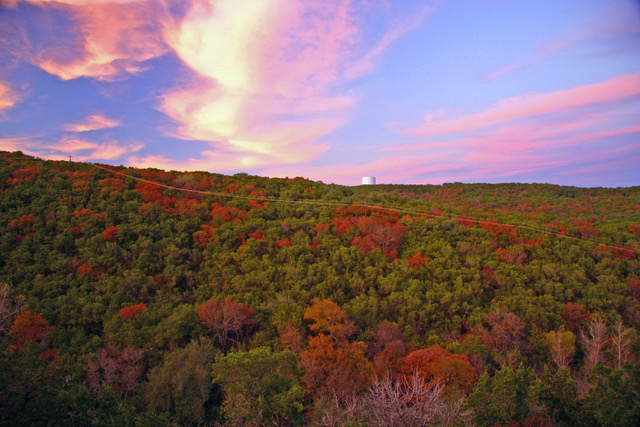
Fall Color in the Balcones Canyonlands Preserve (BCP)

While we are not professionals or employees of the Wildlands Conservation Division, we have volunteered for them for nearly 20 years.  We are Texas Master Naturalists and the authors of two natural history books (with a third in the works).  We also own a private preserve named Woody Hollow that is part of the BCP, and for 10 years have written monthly Nature Watch columns for local neighborhood newsletters.  We have served on the BCP Citizens Advisory Council (CAC) and feel it is important to attempt to set the record straight regarding many of the issues that have been reported regarding the BCP.

In the 1980s, during a conflict that started between land development and enrivonmental conservation, it was discovered that the Golden-cheeked Warbler (GCWA), a bird species that is highly adapted to a very specific and essential habitat in Central Texas, was in peril due to habitat fragmentation and urban sprawl (all GCWAs are native Texans but spend their winters in Central America).  As such, it was listed as a federal endangered species in 1990.  Recognizing that the Austin area was going to continue to grow rapidly (in fact, it has grown over 350% in the last 45 years), the city decided to take action.

In 1992 voters in the City of Austin passed Proposition 10, approving $22 million in bonds for the sole purpose of acquiring and improving lands to be set aside to protect water quality, conserve endagered species, and provide open space for passive public use.  These lands, made up of several tracts in western Travis County, now make up the Balcones Canyonlands Preserve (BCP) System, and are jointly managed and owned by the City of Austin, Travis County, Lower Colorado River Authority, The Nature Conservancy of Texas, Travis Audubon Society, and various private landowers (expressly through permanent conservation easements).  Collectively, activities on these lands are governed by the Balcones Canyonlands Conservation Plan (BCCP) and operated on a permit issued by the U.S. Fish and Wildlife Service (USF&WS).  These activities are carried out by biologists that work for the city or the county, and augmented by corps of specifically trained volunteers.  The preserve system protects 8 endangered species (2 songbirds, 6 karst invertebrates) and 27 species of concern (those becoming increasingly rare).


The endangered Golden-cheeked Warbler (GCWA)

There are several important factors to note regarding the preserve system, which is federally protected.  While this is not intended to be an all inclusive list, it addresses some of the most misunderstood issues and rumors:

• The USF&WS permit has several conditions that must be met, and they include total acreage acquired, amount of edge habitat, and number of karst features protected.  Currently, while progress has been made, not all conditions have been satisfied.

• While the BCCP and resulting preserve system is the first of its kind in the nation (i.e. made up of several distinct tracts managed by a group of partners), it is not the largest preserve in the U.S.

• The USF&WS allows for a concept called ‘take’, a federal term for harm, habitat damage, or other impacts to a species survival.  Developers must pay a fee and donate alternate and suitable acres of habitat commensurate with the acres of habitat they intend to ‘destroy’.  A key point is that the official agreement states that setting aside the 30,000+ acres of preserve was mitigation for allowing 70% of the GCWA’s habitat (non-preserve land) to be developed.  As such, this agreement would be breached if any kind development or other use were allowed in the preserve system.

• There has never been an official promise by any authority to ‘open up the preserve to the public’.  In fact, ‘passive public use’ refers to the grandfathering of BCP several tracts included in the overall system that have always allowed public use: Barton Creek Greenbelt, Bull Creek Greenbelt & District Park, Commons Ford Park, Emma Long Metro Park, Mt. Bonnell Park, St. Edwards Park, Stillhouse Hollow Preserve, and Wild Basin.  These ‘public use’ tracts comprise 30% of the overall preserve acreage.  Additionally, unlike these public tracts, there are very few (if any) trails on many of the other preserve tracts closed to the public.  Two of the best ways to see some of these tracts is to sign up for a guided hike or sign up to become a volunteer (http://www.austintexas.gov/page/bcp-access).

• Some of the larger preserve tracts that were deeded over to the City of Austin carried with them the legal requirement that they would not ever be open for public use.

• Studies are being performed continually on preserve lands to understand what is necessary to optimize conditions for protected species.  For example, data has implicitly shown that the GCWA requires closed canopy and a mix of mature, unfragmented oak-juniper woodland for breeding and nesting success.   Care needs to be taken regarding publicly reported studies regarding the GCWA; many have been proven to overestimate current populations due to incorrect assumptions in the models and/or study constructs.  Additionally, several factors will determine success, including but not limited to the number of acres of protected habitat, long-term viability of the GCWA population, and the genetic diversity of that population.

• Fences have been erected to protect preserve boundaries due to vandalism by neighbors and encroachment on preserve property (fence cutting, tree cutting, trail creation, homeless camps, etc).  Two notable examples include the high-profile River Place trail closure, where a section of the trail was constructed on preserve property with no authorization, and a neighbor in Jester Estates who was arrested by the police after being given a cease and desist order for cutting down large sections of trees in the preserve adjacent to his property (twice!).

• The city and the county have been very attentive to recent concerns about wildfires, and have implemented shaded fuel breaks on urban-wildland interfaces.  Note that increasing human use of preserves would likely increase the chance of human-caused fires and other management issues.  One such issue is the management of feral hogs.  They are of increasing concern and elimination efforts would be such more complicated if tracts were open to public use.

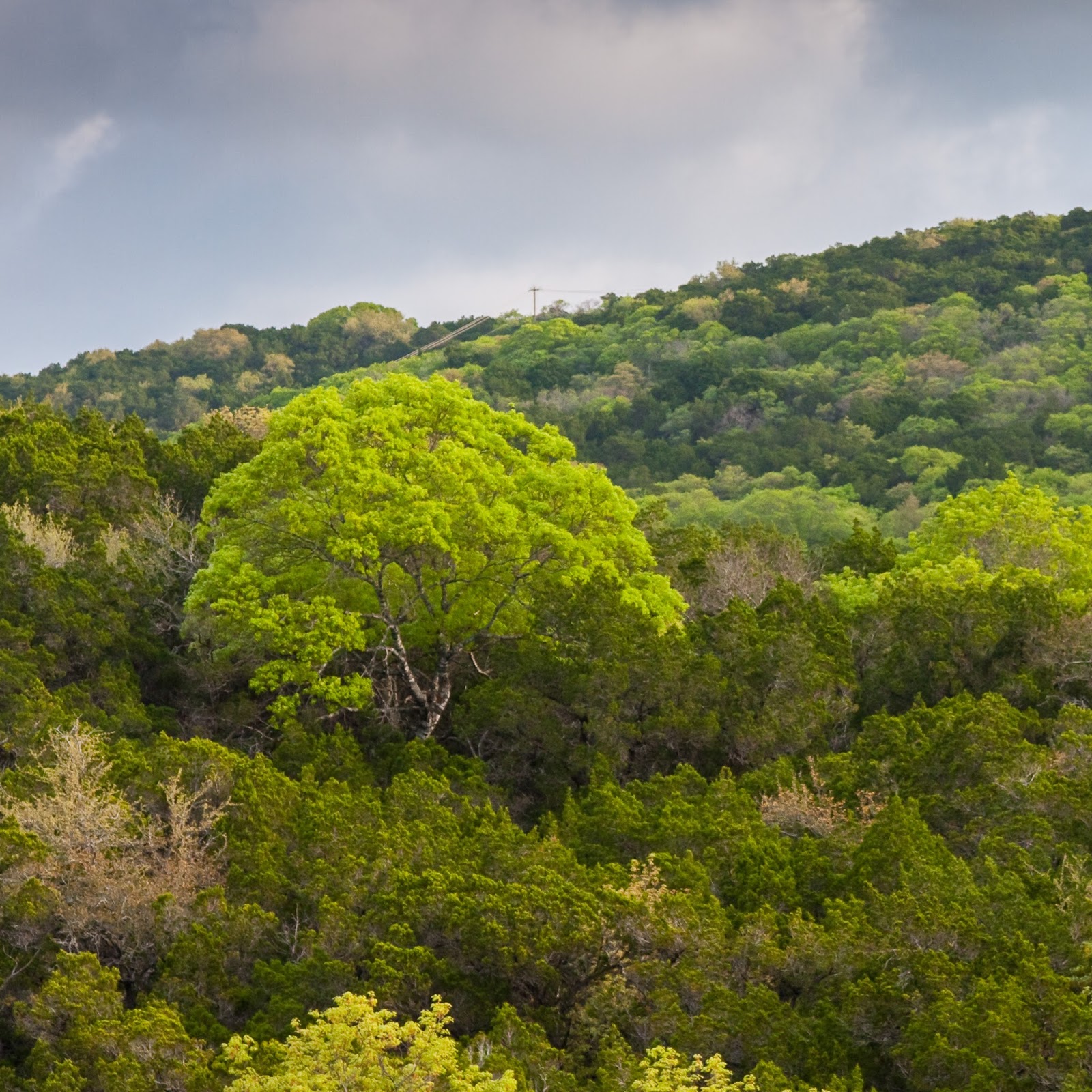
Oak - Juniper Woodland is essential habitat for the GCWA

The benefits of the preserve system are not one-sided.  For humans, it protects our natural heritage by offering sanctuary to a wide array of native plants and animals unable to adapt to urban and suburban development.  Keeping the vegetation healthy helps minimize erosion, moderates urban heat island effects, filters air & water pollutants, and allows rain to slowly infiltrate into the ground to recharge our aquifers.  

One final point.  There is a distinct difference between a ‘park’ and a ‘preserve’.  ‘Parks’ are set aside for people and their recreational activities, while ‘preserves’ are set aside to protect habitat for rare or endangered species as well as the quality of our air and water.  We’re pretty sure most reasonable people would think that’s a fair balance, and one that contributes significantly to the high quality of life here in Central Texas.

P.S. For those who are looking for more trails to use for mountain biking, hiking, and running, consider these excellent alternatives in the area:

Walnut Creek Metropolitan Park (Austin):
http://www.trailroots.com/austin-map-routes/walnut-creek-metropolitan-park-north

Flat Creek Crossing Ranch (Johnson City):
http://flatcreekcrossingranch.com

Rocky Hill Ranch (Smithville):
http://www.rockyhillranch.com

Milton Reimers Ranch Park (Dripping Springs):
https://parks.traviscountytx.gov/find-a-park/reimers-ranch

Reveille Peak Ranch (Burnet):
https://rprtexas.com

Sunday, December 4, 2016

The Preserves Around Us

Golden-cheeked Warbler, Setophaga chrysoparia
One of the main reasons Austin is such a wonderful place to live is because it is interlaced with a patchwork of preserves, which together comprise the Balcones Canyonlands Preserve (BCP) System.  In 1992, voters in the City of Austin passed Proposition 10, approving $22M in bonds for the sole purpose of acquiring and improving lands to protect air and water quality, conserve endangered species, and provide open space for passive public use. Jointly owned and managed by the City of Austin, Travis County, the Lower Colorado River Authority, the Nature Conservancy, the Travis Audubon Society, and private landowners, the BCP’s ultimate goal is to set aside 30,428 acres that contribute to the quality of all life here in Austin. 

A multi-agency conservation effort that operates under a regional permit issued under the Endangered Species Act by the U.S. Fish & Wildlife Service, the BCP consists of several tracts of land in western Travis County.  It is important to note that a ‘preserve’ is different than a ‘park’, and is set aside for the purpose of maintaining a natural state rather than developed for recreational use.  The BCP protects prime habitat for the endangered Golden-cheeked Warbler, a bird species that is found only to breed within Central Texas’ specialized mix of native, mature Ashe Juniper (often incorrectly called ‘cedar’) and stands of Live, Spanish, and Shin oak trees.  This type of mixed oak-juniper woodland grows mainly on our moist steep-sided canyons and slopes, providing the warbler with the food, water, and nest-building material it needs to breed.  

Black-capped Vireo, Vireo atricapilla
In addition to the Golden-cheeked Warbler, 7 other endangered species make the preserve system their home, including the Black-capped Vireo, Tooth Cave Ground Beetle, Tooth Cave Pseudoscorpion, Tooth Cave Spider, Kretschmarr Cave Mold Beetle, Bone Cave Harvestman, and Bee Creek Cave Harvestman.  These last 6 species are called karst invertebrates, arthropods that spend their entire existence underground in karst formations.  These karst features, such as caves, sinkholes, cracks, and crevices, were formed by the dissolution of calcium carbonate in limestone bedrock by mildly acidic groundwater.  Over 70 other rare plant and animal species also exist on the preserves, making this region one of the most biologically diverse areas in the country. As such, Central Texas is happily home to more habitat conservation plans than any other region in the United States.   

These wild and beautiful areas require management plans in order for them to remain pristine habitats.  This includes establishment of secure boundaries and rules for access control, maintenance of appropriate trails, species monitoring, habitat enhancement, and – last but not least – public education and outreach to promote good neighbor relations.  As Austin residents, we can do our part to become stewards of these unique habitats.  While in the preserve system, we can stay on marked trails, travel only on foot, and “take only photographs, leave only footprints.”  In our neighborhoods, especially those that border preserve tracts, we can landscape with native plants, remove invasive plants, eliminate pesticide use, be responsible pet owners, practice water conservation, and always respect preserve boundaries.

Most importantly, we can all minimize further negative impacts on the fragile habitat that surrounds our neighborhoods by caring for the preserves through volunteering.  Some of the activities you can become involved with in the preserve system include long-term habitat restoration, gathering and planting native seeds, removing non-native invasive plants, leading guided hikes, and learning about and sharing your knowledge of the native plants and animals that make this such a special place to live.  For more information, visit the Balcones Canyonlands Preserve website at http://www.austintexas.gov/bcp.